Gymnastics is one of the most effective ways to build total-body strength, coordination, balance, and flexibility. Whether you are a child just starting the sport or an adult exploring bodyweight training, a beginner gymnastics workout can help develop the foundational skills needed for long-term success.
Unlike traditional weightlifting programs, an at home gymnastics workout for beginners relies primarily on bodyweight exercises that train control, mobility, and stability at the same time. This makes gymnastics ideal for beginners because the movements build strength gradually while improving body awareness.
In this guide, you’ll learn how to structure safe and effective gymnastics workouts, which beginner gymnastics skills you can learn at home, what exercises to practice, and how to create a weekly routine that builds skill progression. You’ll also discover helpful resources and equipment recommendations to help you train at home.
Why Start With a Beginner Gymnastics Workout?
A well-designed beginner gymnastics workout builds a strong foundation for more advanced skills later. Before athletes attempt flips, handsprings, or aerial skills, they must first master strength, flexibility, balance basics, and easy gymnastics moves for beginners.
Benefits of beginner training include:
- Improved strength: Gymnastics develops core, arms, shoulders, and leg strength simultaneously.
- Better flexibility: Many movements require mobility through the hips, shoulders, and spine.
- Coordination and balance: Essential for beam, floor, and other apparatus skills.
- Body control: Athletes learn how to control their movements and body positions.
- Injury prevention: Building strength and flexibility protects joints and muscles.
A consistent routine of gymnastics workouts allows beginners to progress gradually and safely while developing confidence in their abilities.
Essential Warm-Up for Gymnastics
Before starting any gymnastics workout, warming up properly is crucial. Gymnastics involves explosive movements and joint mobility, so preparing the body reduces injury risk.
A proper warm-up should last about 10–15 minutes and include:
1. Light Cardio (3–5 minutes)
Examples:
- Jump rope
- Jogging in place
- High knees
- Jumping jacks
These exercises increase heart rate and prepare muscles for activity.
2. Dynamic Stretching (5 minutes)
Dynamic stretching improves flexibility while keeping the muscles active.
Examples:
- Arm circles
- Leg swings
- Walking lunges
- Torso twists
3. Activation Exercises (5 minutes)
Activation drills prepare muscles used in most gymnastics workouts.
Examples:
- Hollow body hold (20 seconds)
- Arch hold (20 seconds)
- Plank (30 seconds)
- Glute bridges (10 reps)
Once your body feels warm and activated, you can begin the main workout.
Beginner Gymnastics Workout Routine
This beginner gymnastics workout focuses on basic conditioning in gymnastics, balance, and flexibility. It can be performed 2–4 times per week and requires minimal equipment.
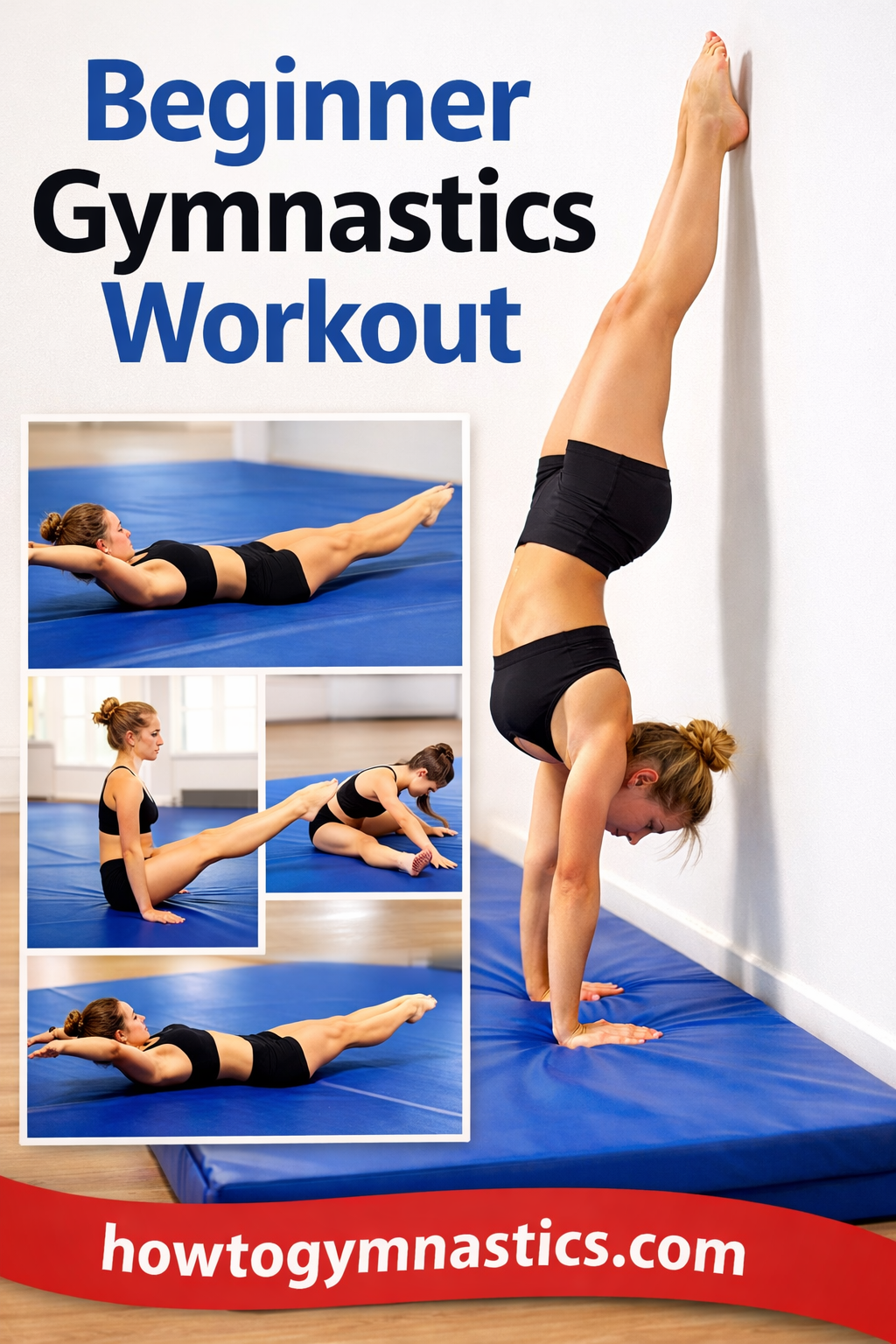
1. Hollow Body Hold
The hollow body position is one of the most important foundations in gymnastics.
How to perform:
- Lie on your back with arms overhead.
- Lift your shoulders and legs slightly off the floor.
- Keep your lower back pressed into the ground.
- Hold the position for 20–30 seconds.
Benefits:
- Builds core strength
- Improves body tension
- Prepares for handstands and tumbling
Perform 3 sets.
2. Push-Ups
Push-ups are essential for building upper-body strength.
How to perform:
- Start in a plank position.
- Lower your body until your chest nearly touches the floor.
- Push back up while keeping your body straight.
Beginner goal:
8–12 repetitions per set.
Perform 3 sets.
Push-ups are a key component in many gymnastics workouts because they strengthen the shoulders and arms needed for skills like handstands and vaults.
3. Wall Handstand Hold
Handstands are a fundamental gymnastics skill.
How to perform:
- Face away from a wall.
- Kick up into a handstand with your feet resting against the wall.
- Keep arms straight and core tight.
Hold for 20–40 seconds.
Perform 3 sets.
If you’re practicing at home, consider using safe training equipment such as a folding gymnastics mat to protect against falls while learning new skills.
4. Squat Jumps
Leg power is essential for tumbling and vaulting.
How to perform:
- Stand with feet shoulder-width apart.
- Squat down until thighs are parallel to the floor.
- Jump explosively upward.
- Land softly and repeat.
Perform 10 repetitions for 3 sets.
This movement improves explosive strength used in many advanced gymnastics workouts.
5. L-Sit Hold
The L-sit develops incredible core and hip flexor strength.
How to perform:
- Sit with legs straight in front of you.
- Place hands beside your hips.
- Lift your body off the floor while keeping legs straight.
Hold for 10–20 seconds.
Perform 3 sets.
6. Beginner Balance Practice
Balance training is essential for beam work.
If you have a balance beam at home, practice walking drills. If not, use a line on the floor.
Exercises include:
- Forward walking
- Backward walking
- One-leg balance holds
- Small jumps on the line
For home training, a folding balance beam for home is a great tool to improve stability and confidence.
Practice balance drills for 5 minutes at the end of your workout.
Beginner Flexibility Routine
Flexibility training is an important part of every beginner gymnastics workout. Gymnasts must develop mobility to perform skills safely and efficiently.
1. Pike Stretch
Sit with legs straight and reach toward your toes.
Hold for 30 seconds.
2. Straddle Stretch
Spread your legs wide and reach forward.
Hold for 30 seconds.
3. Bridge Stretch
Lie on your back and push up into a bridge.
Hold for 15–20 seconds.
4. Shoulder Stretch
Use a wall or floor to stretch the shoulders.
Hold for 30 seconds.
Stretching should always follow the main workout when muscles are warm.
Sample Weekly Beginner Gymnastics Workout Plan
Here is a simple schedule beginners can follow.
Day 1
- Warm-up
- Hollow body holds
- Push-ups
- Squat jumps
- Balance drills
- Flexibility
Day 2
Rest or light mobility work.
Day 3
- Warm-up
- Wall handstands
- L-sit holds
- Push-ups
- Balance drills
- Stretching
Day 4
Rest.
Day 5
Repeat Day 1 workout.
This schedule allows beginners to practice gymnastics workouts consistently while allowing muscles time to recover.
Helpful Equipment for Beginner Gymnastics Workouts
While many skills can be practiced without equipment, a few tools make training safer and more effective.
1. Gymnastics Mat
A quality mat protects against impact when learning new skills.
Check out this guide to the best gymnastics mat for back handsprings for safe home training options.
2. Balance Beam
A low practice beam helps beginners develop balance before attempting full competition beams.
Learn more about choosing a gymnastics balance beam for home.
3. Trampoline
Mini trampolines or backyard trampolines help athletes develop aerial awareness and jumping power.
You can read our guide on the top rated backyard trampoline for safe training equipment.
Using the right equipment can dramatically improve training quality and safety for beginners.
Tips for Success With Beginner Gymnastics Workouts
1. Focus on Technique First
Good form is more important than performing many repetitions.
2. Progress Gradually
Increase difficulty slowly as strength improves.
3. Stay Consistent
Consistency is the key to progress. Even short gymnastics workouts performed regularly can produce great results.
4. Train Flexibility Often
Flexibility improves with frequent practice.
5. Use Safe Equipment
Training mats and beginner equipment help prevent injuries when learning new skills.
Common Mistakes Beginners Should Avoid
When starting a beginner gymnastics workout, it’s important to avoid habits that slow progress or increase injury risk.
Skipping Warm-Ups
Cold muscles are more prone to injury.
Rushing Skill Progressions
Master basics before attempting advanced skills.
Ignoring Flexibility
Tight muscles limit movement and increase strain.
Overtraining
Rest days are necessary for muscle recovery.
Avoiding these mistakes helps beginners build a safe and sustainable training routine.
Final Thoughts
A structured beginner gymnastics workout is the best way to build strength, flexibility, balance, and confidence in the sport. By focusing on foundational exercises like hollow holds, push-ups, handstands, and flexibility training, beginners can develop the physical abilities needed for more advanced skills.
Consistency, patience, and proper technique are the keys to success. With regular gymnastics workouts, beginners will gradually improve their strength, coordination, and overall athletic ability.
If you’re building a home training space, consider exploring equipment guides on HowToGymnastics.com, including:
These resources will help you create a safe and effective training environment as you begin your gymnastics journey.
Warning: The reader of this article should exercise all precautions before following any of the exercises from this article and website. To avoid any problems while doing the exercises, it is advised that you consult a medical professional and are supervised by a gymnastics professional. The responsibility lies solely with the reader and not with the site or the writers.This post can may contain affiliate links meaning if you buy something we get a small commission at no extra cost to you.